U.S. diesel prices hit an unprecedented high, intensifying inflation fears and impacting global markets, including gold and bitcoin.
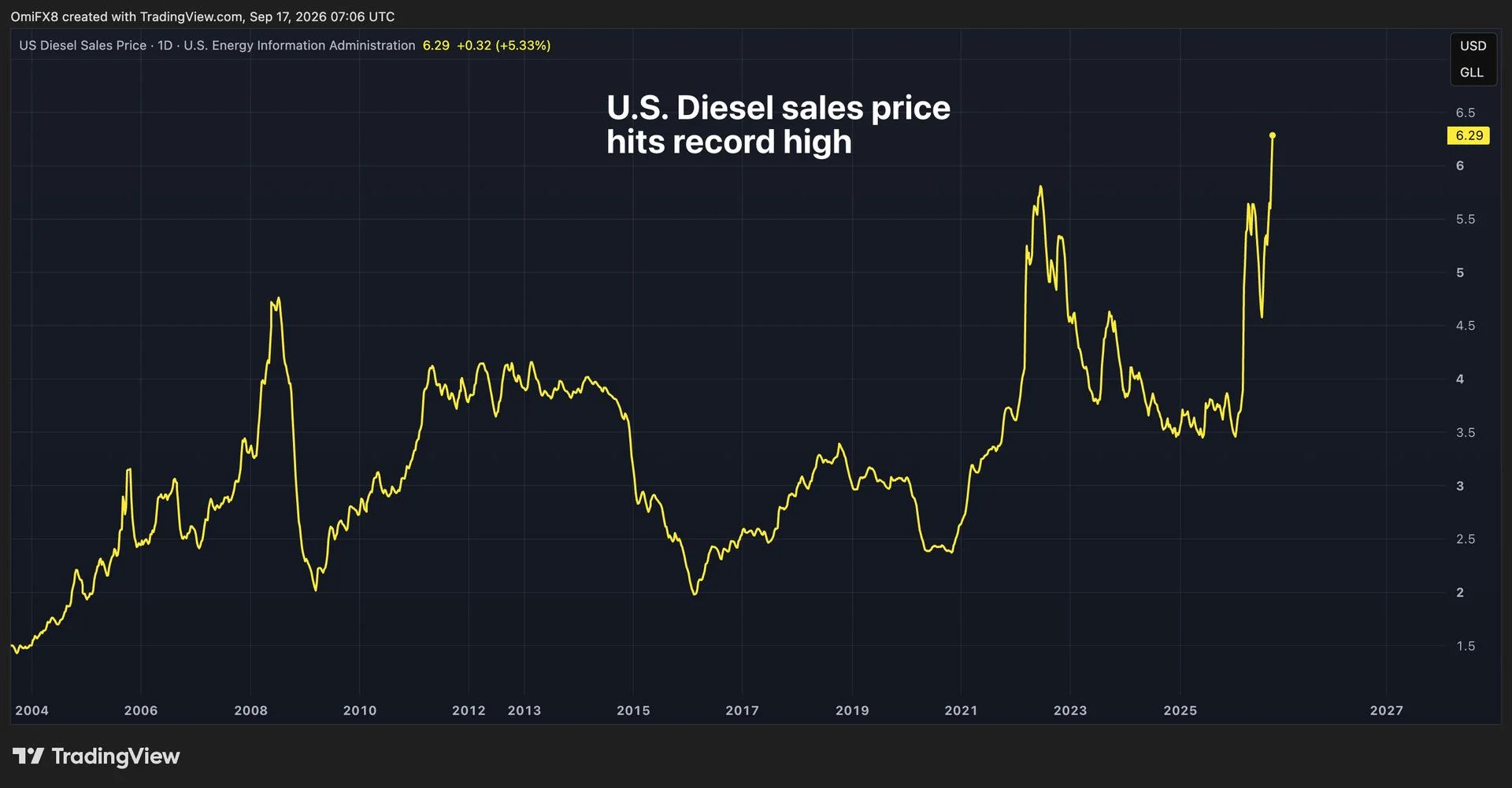
U.S. diesel prices have reached a staggering average of $6.29 per gallon, marking a nearly 80% increase since the beginning of the year, as geopolitical turmoil continues to disrupt energy markets. This surge not only reignites inflation fears but also impacts various sectors reliant on diesel fuel, from freight to manufacturing.
Background on the Diesel Surge
The price hike is primarily attributed to escalating tensions in the Middle East, particularly the ongoing conflict involving the U.S. and Iran, which affects crude oil supply chains and raises risk premiums on refined petroleum products. The intricacies of this geopolitical strife often complicate the global oil market; disruptions can lead to a significant misalignment between supply and demand. Additionally, limited refinery capacities coupled with robust demand from industrial sectors have turned this regional issue into a global pricing crisis.
Understanding the dynamics at play is critical. Oil supply isn't merely a matter of raw extraction; refining capacity is essential to ensure that crude oil is turned into usable products. With production struggles in key regions and refining bottlenecks here at home, it creates a perfect storm for elevated diesel prices. The heavy reliance on diesel for freight and transportation means that this isn't just an oil crisis; it's a logistical nightmare that reverberates throughout the economy.
Economic Ripple Effects
Spikes in diesel prices can increase transportation costs, which eventually ripple through supply chains. This inevitably leads to heightened consumer prices over time. As JPMorgan recently highlighted, “Higher diesel prices can show up in inflation through business costs first, then potentially affect consumer prices over time depending on pass-through and demand.” This statement captures a critical aspect of inflationary pressures — they don't occur in isolation.
When transportation costs rise, businesses often face tough decisions. They can absorb the additional costs, which reduces their profit margins, or they can pass these expenses onto consumers. Either way, this sets off a chain reaction in pricing across multiple sectors, from food to manufacturing to retail. If you’re working in this space, keeping an eye on fuel costs is essential, as those fluctuations will likely affect your bottom line sooner than you might expect.
Central Bank Responses and Economic Implications
Central banks, already vigilant about inflation, are likely to respond by raising interest rates, further complicating the economic landscape. The Federal Reserve recently raised rates by 25 basis points, placing the benchmark cost between 3.75% and 4%. This action underscores a broader inclination among policymakers to combat inflation indirectly tied to oil supply disruptions stemming from geopolitical crises in regions like Iran and Ukraine.
Listeners to economic forecasts cannot afford to be complacent. Market analysts, including experts from Goldman Sachs and Morgan Stanley, expect additional rate hikes soon. Other central banks globally, like the European Central Bank, have signaled intentions to tighten monetary policy. The tightening of monetary policy, if pursued aggressively, could result in a slowdown of economic growth. That being said, the balance of maintaining inflation control while fostering growth is delicate, and we might see divergent paths in different regions.
Impact on Various Asset Classes
The unprecedented rise in diesel prices fundamentally challenges consumer goods and asset markets, including gold and bitcoin. While gold often serves as a refuge during economic uncertainty, cryptocurrency is seen by some as a modern store of value. (and this is the part most people overlook) Historical data shows that climbing borrowing costs can negatively impact cryptocurrency valuations, a trend highlighted during the Federal Reserve's tightening cycle last year. This means that investors need to be cautious about where they allocate funds during these turbulent times.
Market Sentiment and Future Outlook
The implications of these rising diesel prices extend beyond immediate costs; they affect investor sentiment and market dynamics across commodities and tech stocks. Stakeholders are now more than ever scrutinizing the interplay between oil prices, inflation, and monetary policy implications. As stablecoins penetrate the regulated finance sector, especially in APAC, observers are keen to monitor how these shifts will play out amidst volatile conditions.
This presents a difficult conundrum: as diesel prices and borrowing costs rise, businesses across sectors must pivot quickly to adapt. The heightened unpredictability could result in more cautious consumer behavior, which, in turn, affects demand across the board. What this means for you is clear — staying informed and adaptable is essential in this evolving economic climate.
The record diesel prices, fueled by geopolitical and economic tensions, not only elevate inflation risks but also significantly disrupt market sentiment surrounding assets like gold and bitcoin. Stakeholders across various sectors will need to navigate this challenging environment carefully as the situation unfolds. The looming question remains: how long will these diesel prices stay elevated? And what additional shocks await in the global markets amidst ongoing geopolitical struggles? Only time will tell.



Discussion
Sign in to join the discussion.