Recorded Future introduces AI Alert Filtering, enhancing threat analysis by automating relevance-based filtering and reducing alert overload for analysts.

Recorded Future has launched AI Alert Filtering, designed to streamline the initial assessment of alerts by filtering them based on relevance before they even reach an analyst. This advancement enables quicker prioritization while ensuring analysts maintain oversight of the alerts they choose to investigate. The introduction of this feature comes at a critical time when organizations face an unprecedented surge in cyber threats and the subsequent alerts that accompany them.
The rise in threat actor activities, especially those utilizing AI for exploiting vulnerabilities and creating phishing setups, has led to an overwhelming influx of alerts. However, AI Alert Filtering leverages similar AI technology to manage this challenge. By automating the preliminary filter process, it allows analysts to focus on the alerts that truly require their attention, rather than getting lost in the sheer volume of incoming data. Given the complexities inherent in modern cybersecurity, where thousands of alerts can be generated daily, this tool aims to optimize the decision-making process and enhance the efficiency of security teams.
Early users of the feature reported an impressive reduction in alert volume, with averages around 63%, though individual results varied according to their configurations and specific scenarios. This striking figure suggests that the potential for productivity gains is significant—though, of course, the actual effectiveness will hinge on factors specific to each organization's setup. If you're working in this space, knowing the metrics can guide expectations but won't substitute for a tailored approach that considers your unique threat environment.
Enhancing Alert Management
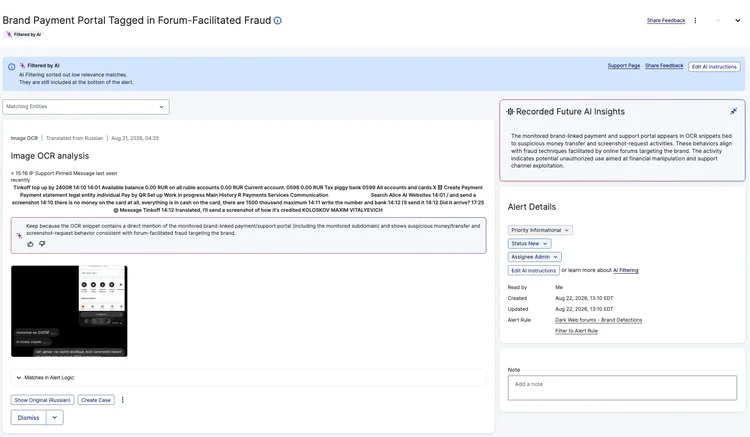
Powered by Recorded Future AI, the new Alert Filtering solution utilizes the Intelligence Graph® to provide context-rich classification for each alert. This technology not only sorts alerts based on their relevance but also generates summaries and explains filtering decisions. Keeping analysts informed is particularly important because understanding the rationale behind certain alerts aids in maintaining trust in AI-assisted systems. The transparency of such processes can mitigate some of the skepticism surrounding automated decision-making, especially in a field where stakes are exceedingly high.
Core Features of AI Alert Filtering
- High and Low Relevance Sorting: Alerts are categorized based on the intent behind the rules used. High Relevance alerts will appear first, while Low Relevance alerts remain accessible without cluttering the initial view. This dual-tier approach is smart—providing necessary visibility without overwhelming analysts with every notification.
- AI Summaries in Alerts: Each alert comes with a summary, enabling analysts to swiftly gauge the urgency of the notification and decide whether it necessitates immediate action. This quick access to synthesized information is invaluable, especially in high-pressure environments where split-second decisions are commonplace.
- Customizable Intent per Rule: Users can fine-tune what the AI prioritizes for their specific needs. For instance, one can specify, “this applies to ACME Bank, not ACME Center,” streamlining results without requiring a complete overhaul of the initial rules. Flexibility in customization is a significant asset, as it accommodates differing priorities and focuses within organizations.
- Optional Auto-Dismiss for Empty Alerts: Alerts lacking relevant references can be dismissed automatically, reducing the clutter in analysts’ queues while retaining access to original details for future review. Many organizations find that noise in alerting systems can contribute to analyst fatigue; this feature addresses that noise head-on.
- No Loss of Data: The AI Filtering primarily alters what is presented to analysts but does not affect the storage of unfiltered alert data. Analysts can revisit original alert details whenever necessary. This aspect is essential; it preserves essential data for investigative purposes while optimizing present-day workflows.
Implications and Future Outlook
The introduction of AI Alert Filtering could represent more than just an incremental improvement in cybersecurity operations; it might also signal a shift in how organizations approach cybersecurity strategies overall. With the automation of routine filtering tasks, security teams may find themselves freed up to pursue higher-level analysis and strategy development. This could encourage a more proactive security posture, pushing teams to anticipate threats rather than merely react to them.
That said, potential pitfalls remain. For one, the reliance on AI for filtering carries inherent risks, including the possibility of misclassification of alerts, which could lead to critical threats being overlooked. To counter this, organizations must maintain a balance between automation and human insight, ensuring that analysts are not entirely reliant on automated systems for their situational awareness.
The continued iteration and adoption of tools like Recorded Future's AI Alert Filtering are essential in shaping the future of threat management. As threat actors evolve in their strategies—including employing AI to mimic legitimate communications and evade detection—security tools must likewise advance. Environment-specific adaptation and continuous learning for AI systems will be necessary to keep pace with these developments. Here’s the thing: Cybersecurity is not just about defense anymore; it's also a race to leverage the same advancements that adversaries might use.



Discussion
Sign in to join the discussion.