North Korean IT operatives persistently infiltrate global job markets, raising serious security concerns for firms hiring remote talent.
Understanding the PurpleDelta Situation
Insikt Group has unveiled troubling patterns linked to PurpleDelta, a term used by Recorded Future to describe North Korean IT operatives primarily functioning out of China. Between late 2024 and early 2025, these operatives applied to over 1,100 organizations, revealing a concerted push to infiltrate positions predominantly in software, staffing, consulting, healthcare, and biotechnology sectors. Their strategies included using at least 22 false identities across various job platforms, supported by AI-generated profile pictures and sophisticated operational methods. This situation raises serious concerns not just for those industries directly involved, but for any organization that relies on a global talent pool.
Application Tactics and Employment Risks
The operational tempo of these PurpleDelta operatives is alarmingly high. Reports indicate they have submitted as many as 60 applications daily, employing multi-account management techniques and meticulous tracking systems to oversee their applications efficiently. Interviews are also a tactical play—operatives often relied on AI tools to generate responses, sometimes using those responses verbatim. It’s this level of planning that paints a sobering picture of intent; they're not just casually searching for jobs. These tactics pose significant employment risks. Once secured in positions, operatives recorded internal meetings and utilized AI-assisted translations to justify the use of personal devices for work-related tasks. This raises the question: How many companies are unwittingly hiring individuals with ulterior motives?
Evidence of Operational Sophistication
The operation's sophistication extends into the tools they employ. PurpleDelta members coordinate through communication platforms like Telegram and Slack, highlighting how easily advanced methodologies can blend into legitimate work environments. They utilize services specifically designed for identity creation and account rental. A concerning detail is that some operatives manage company-issued hardware, further blurring the lines of their affiliations and true motives. This isn’t mere job application fraud; it’s an orchestrated infiltration. Insikt Group indicates that these activities pose an ongoing risk of insider threats to the companies involved. This isn’t just a matter of hiring fraud; it could lead to broader risks, including data theft and sabotage. Their findings emphasize the importance of rigorously vetting candidates who show signs consistent with this type of fraudulent activity.
Broader Context and Implications
PurpleDelta represents a network of state-sanctioned tech workers leveraging global freelance markets to sustain the North Korean regime's financial needs. These operatives masquerade as independent contractors, generating income through elaborate schemes involving shell companies and multiple individual facilitators. This type of operation isn’t isolated; it’s part of a larger tactic by state actors to infiltrate and manipulate various sectors for strategic gain. The overlap with other North Korean threat actors like PurpleBravo suggests a greater potential for intelligence-gathering and further compromises within supply chains. It's alarming to consider that these methods could lead to undetected disruptions and vulnerabilities in critical infrastructure.
Job Applications by Sector
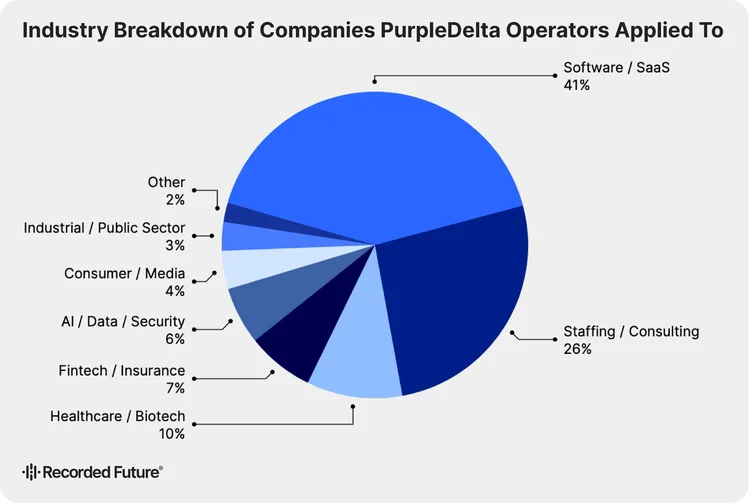
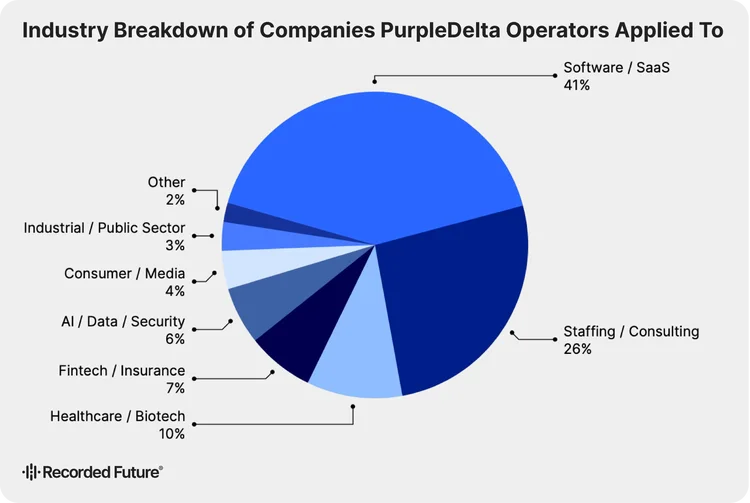
The recent wave of applications from PurpleDelta operatives indicates a significant focus on various sectors. Close to 41% targeted the IT and software services industry, which has become increasingly central to modern economies. Staffing and consulting received about 26%, while healthcare stood around 10%. Notably, about 80% of these applications went to companies based in North America, with a few reaching far beyond into global markets. The nexus of activity appears centered around Shenyang, China, revealing the geographical roots of these operatives. If you're working in this space, consider how many of these risks could be hiding in plain sight, as operatives blend in among legitimate applicants.
Conclusion and Recommendations
The ongoing activities of PurpleDelta serve as a stark reminder for organizations hiring for remote technical roles to remain vigilant. Companies should utilize this information to thoroughly investigate the employment history and access controls of individuals exhibiting the characteristics of these operatives. Enhanced scrutiny during the hiring process is essential. By doing so, firms can potentially mitigate the risks associated with hiring foreign operatives directed by hostile state actors. The implications reach beyond immediate operational security; they could affect long-term organizational integrity and trust in the hiring processes. Given the level of sophistication demonstrated by these operatives, vigilance is no longer optional; it’s essential.
Future Outlook
The PurpleDelta situation raises several questions about the future of employment practices in tech. As remote work continues to expand, the risks associated with hiring proliferate, demanding a shift in how companies approach talent acquisition. For instance, will organizations invest in advanced vetting technologies or rely on traditional background checks? These decisions might shape the workforce landscape significantly. And, will industries adapt quickly enough, or will they remain reactive to evolving threats? The coming years will likely reveal how companies balance the need for immediate talent against the imperative for security.



Discussion
Sign in to join the discussion.