Circle's Arc blockchain faced an unexpected surge of memecoins on launch day, raising concerns and skepticism among traders and industry experts.
Unexpected Challenges for Arc Blockchain
Circle's Arc blockchain officially launched on Wednesday, marking a significant milestone for the company amidst a continually shifting cryptocurrency landscape. High-profile validators such as BlackRock, Visa, and Mastercard lend credibility to the effort, suggesting that the collaboration aims to bridge traditional finance with the burgeoning crypto sector. CEO Jeremy Allaire emphasized that this event marks a pivotal moment for the company, akin to the launch of USDC. In just the first 24 hours, the blockchain processed a staggering 7.83 million transactions. This volume, however, presents a paradox: those transactions were predominantly centered around memecoins rather than intended use cases like payments, raising questions about the platform’s fundamental purpose and viability.
Transaction Volume vs. Practical Use
At first glance, nearly 400,000 new accounts and over 73,000 smart contracts deployed seem like a success story. But dig a little deeper, and the picture isn’t so rosy. The average transaction fees surged to three cents, reflecting increased activity but also potential instability in the transactional environment. Given the chaotic nature of memecoins, the rising fees could deter users looking for reliable financial instruments. According to Arc's Blockscout explorer, lifetime USDC transfers are still relatively low, standing at about 624,000. This points to a troubling possibility: if the platform's core functionality—facilitating stable and efficient transactions—remains underutilized, its long-term prospects could be jeopardized. It's not just about numbers; it’s about what those numbers signify for the platform’s trajectory.
Market Reaction and Critiques
The initial market sentiment turned sharply negative, primarily due to the influx of memecoins flooding the network. Traders quickly expressed disappointment, worried that this heavy reliance on meme tokens could diminish Arc's credibility. One notable trader on X articulated a bleak outlook, observing, "Arc is one day old, and every coin is already down like 50-80%." It's hard to dismiss the validity of such concerns when you consider that memecoins like TOLLY, LONG, and COOL experienced significant price drops, with losses ranging from 56% to 77% from their launch highs. Such volatility could lead potential users to question whether they should invest their time or money into a network that appears to ride the waves of speculative thrill instead of reliable utility.
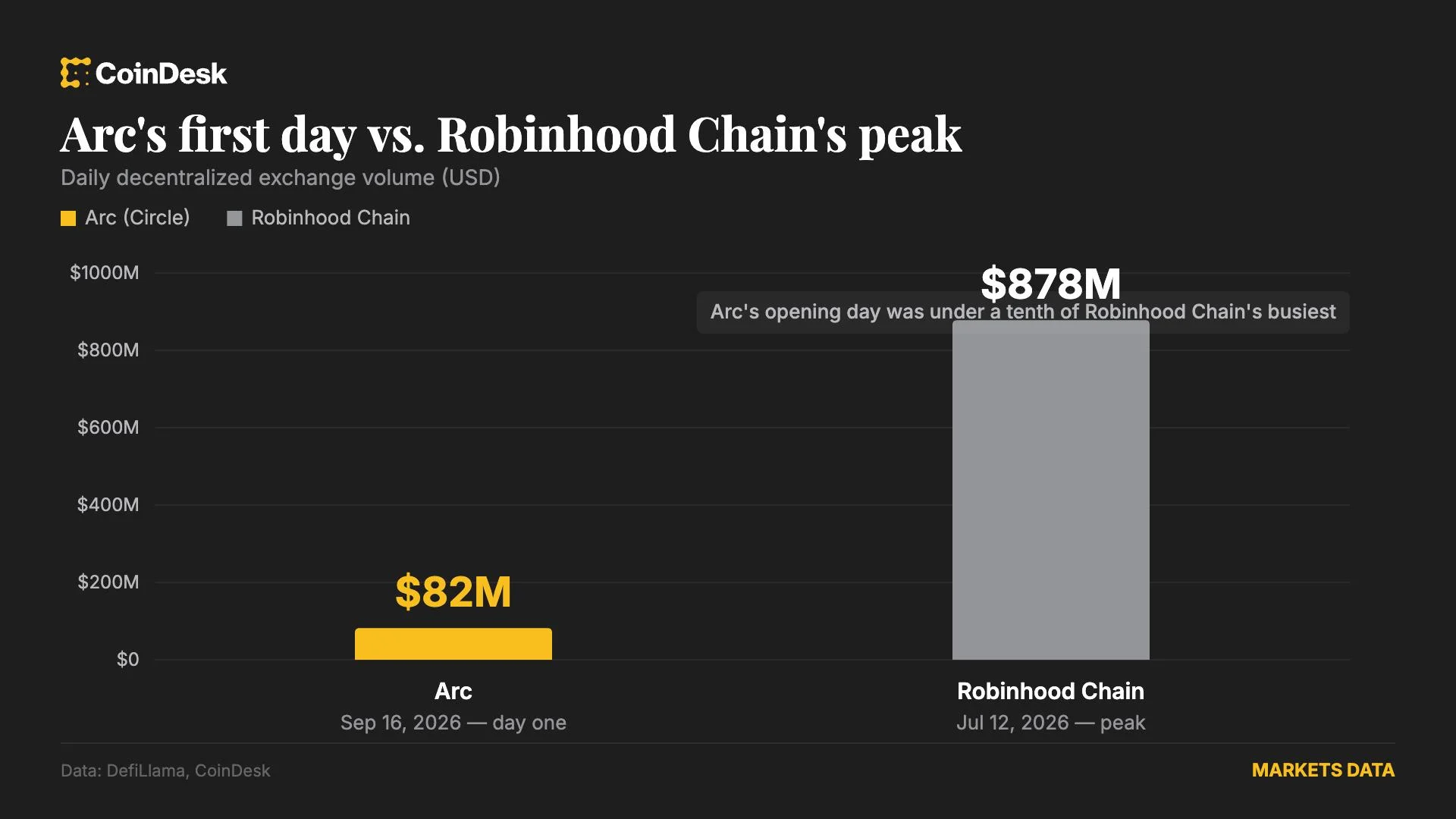
Moreover, the decentralized exchange (DEX) volume on Arc reached around $82 million on day one. In contrast, Robinhood Chain managed an impressive $878 million on its launch day, despite also succumbing to a memecoin influx. This raises a broader question about the sustainability of such projects when initial volumes are primarily driven by speculative trading rather than genuine interest in utility. To further complicate matters, Arc’s largest token, ARGUS, currently holds a market cap of $16 million, which significantly lags behind competitors like Circle's own products, cirBTC and EURC.
Internal Missteps and Perceptions
A significant misstep occurred when Rachel Mayer, Circle's VP of product for Arc, posted a promotional AI-generated image of DUKE—a memecoin—claiming it was Allaire's pet. This seemingly innocuous move led to considerable backlash, with critics accusing Circle of trying to promote speculative tokens to bootstraps interest in their own network. Accusations of amateurism are particularly damaging for a platform that positions itself with large corporate backers. One critic pointed out a troubling disconnect within Circle's team regarding meme culture. This raises an essential question: is Arc trying to establish itself as a playful chain suited for meme enthusiasts, or is it aiming to be a serious contender in the stablecoin market? The ambiguity in its positioning could confuse potential users, who may find themselves questioning the platform's long-term vision.
Performance Metrics Amid Skepticism
Despite the initial excitement and apparent technical competence, the Arc blockchain has encountered hurdles related to ongoing skepticism from the memecoin community. Although it reliably processes blocks with half-second intervals and experiences no significant congestion, this technical performance doesn't necessarily translate to trust or sustained interest. Speculative trading has driven initial volumes, but the question remains: how sustainable is this approach? For true adoption to occur—which is critical for the platform's longevity—Arc needs to pivot back to its foundational promises and definitions, reasserting its original mission amid the noise of rampant speculation.
Future Outlook: Examining Implications
What does all this mean for the future trajectory of Arc Blockchain? The immediate metrics seem to suggest strong engagement. Yet, understanding what drives that engagement reveals fundamental weaknesses. If the focus remains on memecoins, real-world applications of blockchain technology will likely be overshadowed, risking Arc's potential to emerge as a serious player in digital finance. If you’re working in this space, watching how Arc navigates its challenges will be crucial. Responding to market criticisms and maintaining clarity in its messaging will be key as it aims to build trust beyond the memecoin frenzy. As companies like Circle push ahead, they’ll need to tread carefully, balancing between the allure of meme culture and the integrity of financial transactions. The way forward is murky but not without possibilities. The question becomes: can Arc evolve beyond its 24-hour memecoin fame to establish a lasting, stable foothold in a challenging financial environment?


Discussion
Sign in to join the discussion.