Traders respond to the Fed's latest interest rate hike as the crypto market rebounds, albeit with significant outflows from ETFs.
Fed's Rate Hike and Market Reactions
The Federal Open Market Committee (FOMC) has raised its target interest rate by 25 basis points, bringing it to a range of 3.75% to 4%. This move signals the central bank's ongoing battle against inflation, a concern that's been central to economic discourse for some time now. Chair Kevin Warsh expressed clear unease about the persistent nature of inflation, emphasizing that recent economic data fails to demonstrate a significant improvement in underlying trends. With inflation figures seeming stubborn, the implications of this decision reverberate through various sectors of the economy, particularly heavy interest-sensitive areas such as real estate and consumer spending. Adjustments in the interest rate will typically influence borrowing costs, which could further dampen economic activity if the trend continues.
Market Outlook and Predictions
What's caught the attention of financial analysts and investors alike is the committee's updated "dot plot" forecast. It indicates a median policy rate of 4.1% is anticipated by the end of both 2026 and 2027. This point is significant as it suggests that only one additional 25 basis-point hike might be on the table, which differentials itself from fears of an aggressive tightening cycle that some had speculated about. The cautious optimism reflected in the dot plot has provided a semblance of stability in the market, easing fears of an uncontrolled inflation scenario.
Still, some experts express skepticism about the forecasts. Given recent inflationary pressures, the actual economic climate could easily diverge from the FOMC's projections. If you’re working in this space, you might want to keep a close eye on how actual inflation trends unfold versus what the Fed predicts. Market participants are likely collecting data on upcoming economic reports to assess if the central bank's actions are indeed well-aligned with economic realities.
Crypto's Performance Amid Broader Trends
In light of the latest developments from the Fed, risk assets have enjoyed a rally, showcasing the interconnectedness of various financial markets. The Dollar Index experienced a minor drop of about 0.17%, a signal that traders might be shifting their focus away from the dollar as a safe haven asset. Futures on the Nasdaq 100 and S&P 500 climbed by 1.04% and 0.81%, respectively, underscoring the cautious optimism that pervaded after the rate hike. Precious metals also saw gains, with gold and silver recording increases of 1.02% and 1.52%. Such movements indicate that investors are realigning their portfolios in response to the Fed's decisions.
Yet, even amid this optimism, the two-year Treasury yield fell by 2 basis points to 4.71%. This decline came after it peaked at a level not seen since 2024, showcasing a potential shift in investor sentiment toward bonds, particularly in short-term durations. If the correlation between markets continues to hold, the question now is: will this brief rally among risk assets have lasting power, or is it just a temporary ascent fueled by a reaction to monetary policy changes?
Shifts in Crypto and ETF Activity
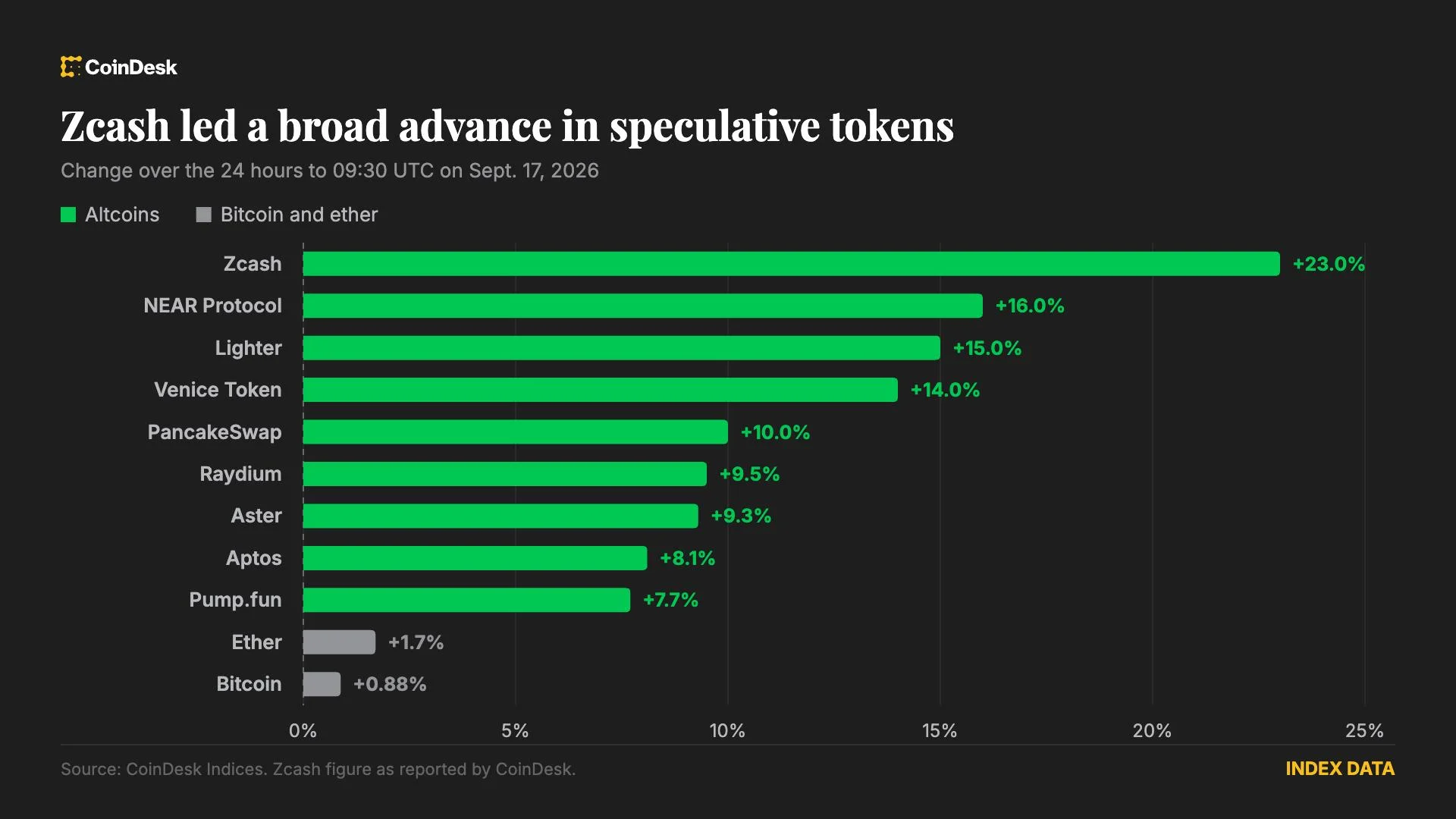
Intriguingly, the cryptocurrency market has shown signs of changing its correlation dynamics. It appears to be tracking more closely with equities, a notable shift from earlier this week when crypto displayed more unique market behavior. The trend upward is promising—94 out of the CoinDesk 100 have successfully risen over the past 24 hours, while the CoinDesk 80, which focuses on smaller-cap cryptocurrencies, has surged by 4.7% against a marginal rise of 1.2% in the bitcoin-driven CoinDesk 5. This shift signifies a potential maturation of the crypto market as it harmonizes more closely with traditional equities.
(And this is the part most people overlook) The synchronization of crypto with stock performance could point to a broader re-examination of risk appetite among investors. This convergence might indicate that as the macroeconomic environment fluctuates, investors are increasingly viewing crypto assets as part of their broader investment strategy, rather than as standalone, divergent assets.
Fund Flows and Bitcoin's Stagnation
Despite the recent upticks in some segments of the market, fund flows present a more troubling picture for cryptocurrencies. U.S. spot bitcoin ETFs experienced a striking loss of $295.98 million in just one day, compounding a previous decline of $450.33 million. This ceiling of withdrawals brings total outflows since September 8 to over $1 billion—a staggering figure that puts the ongoing appetite for Bitcoin under scrutiny. Currently, total net assets for these ETFs sit at around $95.19 billion, reflecting the impact of outflows on investor sentiment. Moreover, Bitcoin continues to trade about 6.9% below its monthly high of $82,284 reached earlier in September.
This stagnation in Bitcoin's price, juxtaposed with significant outflows from ETFs, might lead to a regression in the market's confidence. Investors appear cautious, potentially steering clear of riskier assets as they reevaluate their holdings amid changing macroeconomic signals.
Implications and Future Outlook
As stablecoins integrate into regulated financial frameworks, we see the Asia-Pacific region emerging as a crucial testing ground. Evolving rules are shaping adoption pathways and use cases, which might have far-reaching implications for global cryptocurrency markets. If regulatory clarity increases, we could see greater institutional investment in cryptocurrencies, a factor that could stabilize the volatile market.
However, challenges remain. Investors should prepare for continued market fluctuations as economic conditions evolve, particularly in response to Fed actions and inflation numbers. The road ahead seems uncertain, but a growing interest in the intersection of traditional finance and crypto could redefine how both ecosystems interact. In any case, one thing seems clear: the coming months will be critical for assessing the long-term sustainability of this currency evolution.



Discussion
Sign in to join the discussion.