With rising interest rates signaling potential market shifts, Bitcoin's performance mirrors past trends, leading to speculation about its future trajectory.
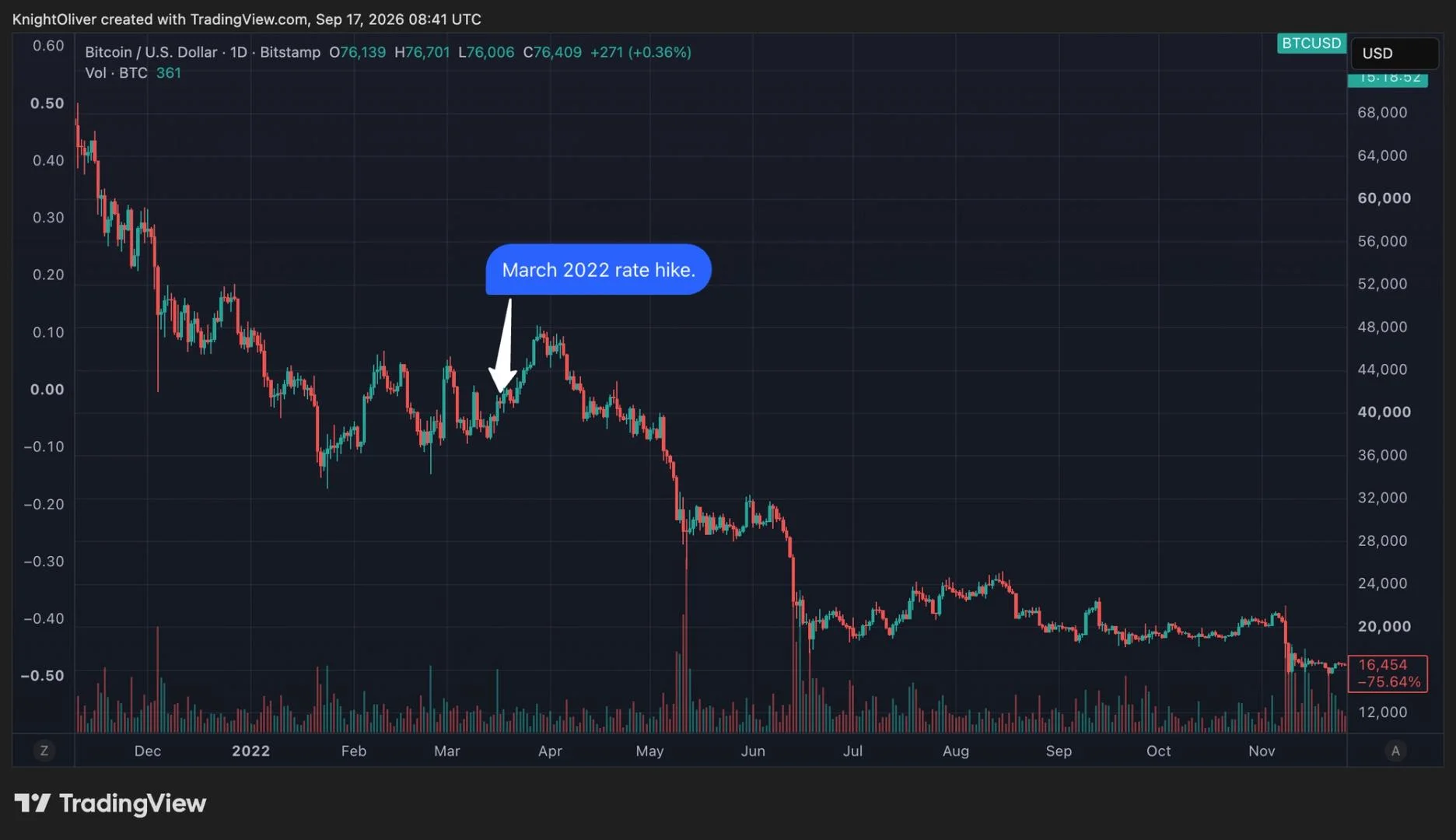
The Federal Reserve's recent decision to raise interest rates by 25 basis points marks a significant shift in its monetary policy, elevating the benchmark range to between 3.75% and 4.00%. This move, the first in over three years, signals a re-commitment to combating inflation amid a challenging economic environment. Markets are now anticipating an additional tightening of 75 basis points in the coming six months. Historically, the Fed rarely opts for a one-off rate hike; since 1994, they have only taken a “one and done” approach once in the twelve tightening cycles observed since 1955. This trend suggests that further increases are not just possible but likely, prompting speculation about their broader impact on the economy.
Historical Context of Interest Rate Hikes
To understand the significance of the Fed's recent decision, it helps to reflect on historical practices during similar periods. Interest rate hikes typically occur when the economy shows signs of overheating or when inflation becomes a persistent challenge. The Fed's approach has evolved through economic cycles, and their current stance reflects a cautious balance between fostering growth and curtailing inflation. The decision to raise rates in times of economic uncertainty, like the present, isn’t taken lightly; it can precipitate a cooling-off effect on various sectors, including housing, consumer spending, and investments.
Additionally, the ramifications of these hikes resonate beyond traditional markets. If you're working in this space, keep an eye on how such monetary policies shift investor behavior, particularly in alternative assets like cryptocurrencies. A tightening cycle can extinguish speculative fervor, causing turbulence in previously buoyant markets. For a historical reference, during the 2015 to 2018 rate hike cycle, many asset classes, including tech stocks and cryptocurrencies, faced headwinds as funds became scarcer.
Cryptocurrency Market Reactions
The current scenario's parallels with the events of 2022 are striking. Bitcoin, which reached a high of about $69,000 in November 2021, saw a downturn of about 40% following the Fed's first rate increase in March 2022. Presently, Bitcoin is trading around 40% lower than its peak of $126,000 from October. These price shifts underscore the cryptocurrency market's sensitivity to macroeconomic changes, particularly interest rate adjustments.
After the initial rate hike in March 2022, Bitcoin did experience a brief rally of around 18% over a 12-day period, but this was short-lived. The coin subsequently crashed, dropping approximately 50% soon afterwards. This pattern suggests the possibility of a relief rally once again before a protracted bear market settles in. Yet, there's a stark absence of reliable historical data to predict the outcome definitively. Notably, Bitcoin's decline in 2022 mirrored broader downturns across equities, bonds, and metals. This systemic correlation reflects the overarching economic pressures at play rather than isolated events within the crypto sphere. (And this is the part most people overlook.)
Inflation and Its Impacts
This recent hike stems largely from persistent inflation concerns that have permeated the economy. The annual headline inflation rate has remained above 2% for over five years, an era marked by unstable economic conditions. Core inflation—excluding volatile food and energy prices—recently dipped to 2.4%, the lowest level in five years. While this could signal progress toward stabilization, there are warning signs on the horizon. The fight against inflation is far from over.
Ongoing energy price hikes, significantly influenced by geopolitical tensions in the Middle East, threaten to revive inflationary pressures. Crude prices have surged past $100 a barrel, adding both complexity and urgency to inflation management. The connection between rising energy costs and broader economic growth is critical; as energy prices escalate, they strain households and businesses alike. This is not merely an economic issue; it’s a social one, as increased living costs may lead to reduced consumer spending and dampen overall economic activity. Concurrently, global bond yields have surged, with the U.S. 10-year Treasury yield hitting 5%, which adds strain on financial conditions and risk assets across the board.
Future Outlook
As Bitcoin's bear market approaches its one-year mark, the question looms: will this new cycle of rate hikes extend the downturn? Observing these shifts is vital for professionals tracking financial markets, especially with cryptocurrencies. There’s a palpable sense of anxiety among investors about how far and fast the Fed will move. Given historical trends, it's reasonable to suspect that the current environment of interest rate increases could lead to a prolonged period of market adjustment, most notably in risk assets like Bitcoin.
This is where speculation meets reality: the new monetary policies could exacerbate existing pressures, creating a dynamic that makes recovery elusive. That's no small consideration for anyone heavily invested in cryptocurrencies or industries sensitive to interest rate fluctuations. The interplay between monetary policy and market performance is complex and fraught with uncertainty. One thing is clear: the effects of the Fed's actions will ripple through both traditional and emerging markets, influencing strategies and outcomes far beyond immediate reactions.


Discussion
Sign in to join the discussion.