Explore how the O*NET framework enhances understanding of job transitions, emphasizing transferable skills amid changing industry dynamics.
Significance of Occupation Transition Pathways
This section captures a pivotal moment in understanding labor market dynamics, particularly focused on how workers, specifically truck drivers, can transition to other occupations based on transferable skills. The methodology presented here, rooted in the O*NET framework, provides a fascinating glimpse into the potential shifts in the job landscape due to automation and changing industry demands. The authors of this analysis draw heavily on the previous work by Bratanova et al. (2026), where they explored similar transition pathways. However, there’s a key twist: while sharing the same overarching goal, this analysis utilizes an updated version of the O*NET database and a different mapping between the US Standard Occupational Classification (SOC) and the Australian and New Zealand Standard Classification of Occupations (ANZSCO). Such changes can significantly alter outcome interpretations, and the differing similarity scores reflect these nuances more than they do fundamental methodological flaws.Understanding Human Capital in Transition
A robust part of this discussion revolves around the concept of human capital, which encapsulates everything that contributes to a worker's productivity—skills, experience, and even emotional intelligence. Economists have long wrestled with defining and quantifying human capital because its impact on social and economic outcomes is substantial. This discussion isn't merely academic; it has real-world implications for workforce development and policy. Historically, human capital was often simplistically viewed as a function of education and experience. But as Autor, Levy, and Murnane (2001) introduced, it’s more complex than that. They argued for a task-based understanding of occupations, suggesting that it's not merely about what credentials someone holds but what they can actually do on the job. This perspective shifts the focus towards the competencies required for tasks, like route planning for a truck driver or customer interaction during deliveries, providing a more nuanced view of occupational mobility.O*NET: An Analytical Framework
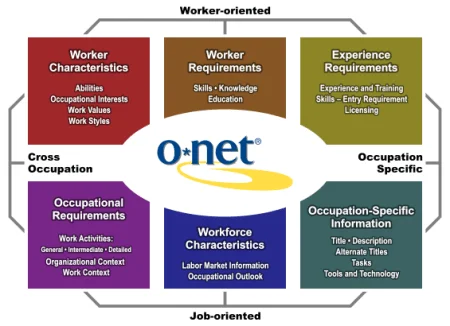
At the heart of this exploration lies the O*NET database. It catalogs over 800 occupations, each characterized by a variety of skills, abilities, and tasks. This structured information allows for a deeper analysis of how jobs relate to each other across different sectors. The essence of this framework is that by defining the unique qualities of each occupation, we can glean insights into how transferable skills might facilitate employment transitions. The continuous updates to the O*NET database are not merely cosmetic but rather fundamental to ensuring that the metrics applied remain relevant in an evolving job market. This flexibility is crucial, particularly as industries face disruption from technology and automation—key considerations for any worker navigating their career trajectory today. With this analysis, the authors emphasize the strategic importance of understanding similarities among occupations. By focusing on shared skills and knowledge requirements, they pave the way for a clearer pathway for workers, especially as shifts in technology threaten traditional roles. The ability to identify viable transition options based on these criteria is invaluable as it equips workers to adapt to changing circumstances. If you're involved in workforce planning or human resources, these insights could be vital in shaping strategies for supporting workers affected by these shifts. In summary, while the study reflects a solid continuation of previous methodologies, it also opens the door to fresh interpretations and discussions on evolving career pathways in a tech-driven age. Understanding these dynamics isn't just for academics; it’s crucial for anyone engaged in shaping the future of work.Understanding Skill Gap Calculations
The study's methodology for assessing occupational similarity hinges on nuanced comparisons among various jobs. Each ANZSCO (Australian and New Zealand Standard Classification of Occupations) group correlates with several roles from O*NET, the U.S. Department of Labor’s online database of occupational information. This cross-referencing allows researchers to derive average ratings that symbolize a "typical job" within these groups. Why is that important? By averaging these ratings on a scale from 0 to 100, it's easier to quantify and contrast various occupations, making the data more interpretable for stakeholders seeking insights into workforce transitions. At the heart of this analysis is the comparison between an origin occupation—say, truck drivers—and other occupations, examined through specific attributes. For each attribute, the absolute differences in both skill levels and the importance ascribed to those skills are calculated. These differences form a rough estimate of the “skill gap.” A larger gap signals greater disparity between the two jobs. Ultimately, these differences are averaged out across various characteristics, contributing to an overall score closer to 100 indicating that two jobs share more similarities.Processing O*NET Data for Analysis
The next step is crucial: it involves linking the Standard Occupational Classification (SOC) to the ANZSCO correspondence table and the O*NET data. The relationship here isn't one-to-one; rather, many SOC codes might correspond with various ANZSCO groupings. Take, for example, the SOC occupation “Light Truck Drivers,” which spans several ANZSCO categories like “Ambulance Officer” and “Courier.” This nuanced mapping ensures that the average characteristics derived for occupational comparisons accurately reflect the variability within those job titles. What's compelling is the implication of using average ratings versus picking a single O*NET occupation for each ANZSCO group, a differing approach taken by Bratanova et al. in 2026. By averaging, the analysis captures a more holistic view of what skills are required across the spectrum of associated jobs within a group, rather than drawing from just one specific case.Operationalizing the Comparisons
The ensuing code snippets illustrate how this approach comes to life. They show how to average these occupational ratings effectively, critical for understanding job transitions. The many-to-many join in the data processing reflects the real-world complexity of job functions. For instance, the O*NET occupation might apply broadly across multiple ANZSCO groupings, necessitating a method that encompasses this breadth. As researchers progress from scaling ratings to calculating skill gaps, the importance of each characteristic becomes clearer. By analyzing a few selected skills—like “Operation and Control”—across varied occupations such as truck drivers, bus drivers, and financial managers, significant insights begin to emerge. The minimal gaps between truck and bus drivers suggest these roles share skills, making transitions smoother for workers. Conversely, the substantial difference when compared to finance managers illustrates how distinct these job functions are, which potentially complicates employment mobility.Identifying Occupation Pairs
In calculating the similarity scores, code functionality allows for a granular comparison of various occupation pairs. By creating origin-destination job pairings, the analysis positions specific skills and knowledge side-by-side, facilitating a direct gap evaluation. Each pair undergoes analysis to assess not just raw differences in skill levels, but also the implications of those gaps in importance. This detailed approach is invaluable, providing data that go beyond surface-level comparisons. The goal is to generate similarity scores that succinctly capture how closely aligned two job types are, mapping from the minor differences in skills between roles like truck drivers and bus drivers to the stark contrasts with managerial positions. The lower the scores for important skills indicates a clearer path for workers looking to transition jobs, while high scores reinforce the notion of transferable skills. This granularity and focus on skill gaps equip stakeholders with data essential for workforce development and policy decisions.Final Thoughts
While the comparison between our findings and those from Bratanova et al. (2026) reveals some discrepancies, the closeness is surprisingly reassuring, given the inherent variability in our source data and methodology for aligning O*NET with ANZSCO classifications. This exercise demonstrates the significant potential of similarity scores in mapping occupational skills and suggesting pathways in the labor market.
However, my exploration into the reasons behind the statistical variances was illuminating. By adjusting the foundational assumptions—like the choice of crosswalks between classifications—I found that these mappings significantly affect the scores offered by our analysis. Notably, two primary factors contributed to the higher similarity scores we observed:
- Breadth: Our methodology, which leverages ISCO-08's broader definitions, enables a more extensive assignment of O*NET occupations to ANZSCO groups. This expansive mapping leads to the inclusion of closely related occupations across adjacent classification units, thereby inflating similarity scores. The data underlines how interconnected some occupational profiles are, providing a more nuanced view of skill overlaps.
- Overlap: The adjustments in ANZSCO, coupled with the aforementioned ISCO-08 mapping, mean that several unit groups often share identical occupations. This overlapping assignment, such as with Truck Driver (General) and Forklift Driver, amplifies the calculated similarities between these roles, as evidenced by them sharing profiles from O*NET.
Such findings are familiar to anyone who has wrestled with occupational mapping before. They serve as a reminder of the complexities inherent in applying statistical models to labor dynamics. The intent behind this post extends beyond technical analysis; it's about illustrating how O*NET-derived similarity scores can function as a tool for exploring potential career transitions. In that regard, I’m pleased with the outcome.
Yet, as valuable as similarity scores are, they come with caveats. They can’t ascertain whether these paths are genuinely viable for individuals. Importantly, they neglect logistical considerations like relocation, wage disparities, or the quality of work conditions. Moreover, they gloss over personal struggles, such as disrupted relationships or the difficulty of redefining one's professional identity. These are vital factors to consider for anyone contemplating a career shift, reminding us that behind every data point lies a real human experience.



Discussion
Sign in to join the discussion.