Discover how Scikit-LLM enhances scikit-learn workflows by integrating language models, offering efficiency and ease of use for AI engineers.
The Challenge of Blending Traditional Approaches with LLMs
For those immersed in machine learning, the task of fusing large language models (LLMs) with traditional methods can often feel overwhelming. There's a tension between leveraging established systems like scikit-learn and engaging with the newer capabilities that LLMs offer. On one hand, scikit-learn provides a solid framework for a variety of machine learning tasks, known for its straightforward pipelines and evaluation tools. On the other hand, integrating LLMs typically involves scripting a multitude of API interactions. This is where things can get tricky: managing clunky error handling isn't just inconvenient; it can seriously compromise performance. The blending of these two approaches isn't just a technical hurdle; it's a philosophical one, often forcing practitioners to choose between simplicity and power.
Understanding Scikit-LLM
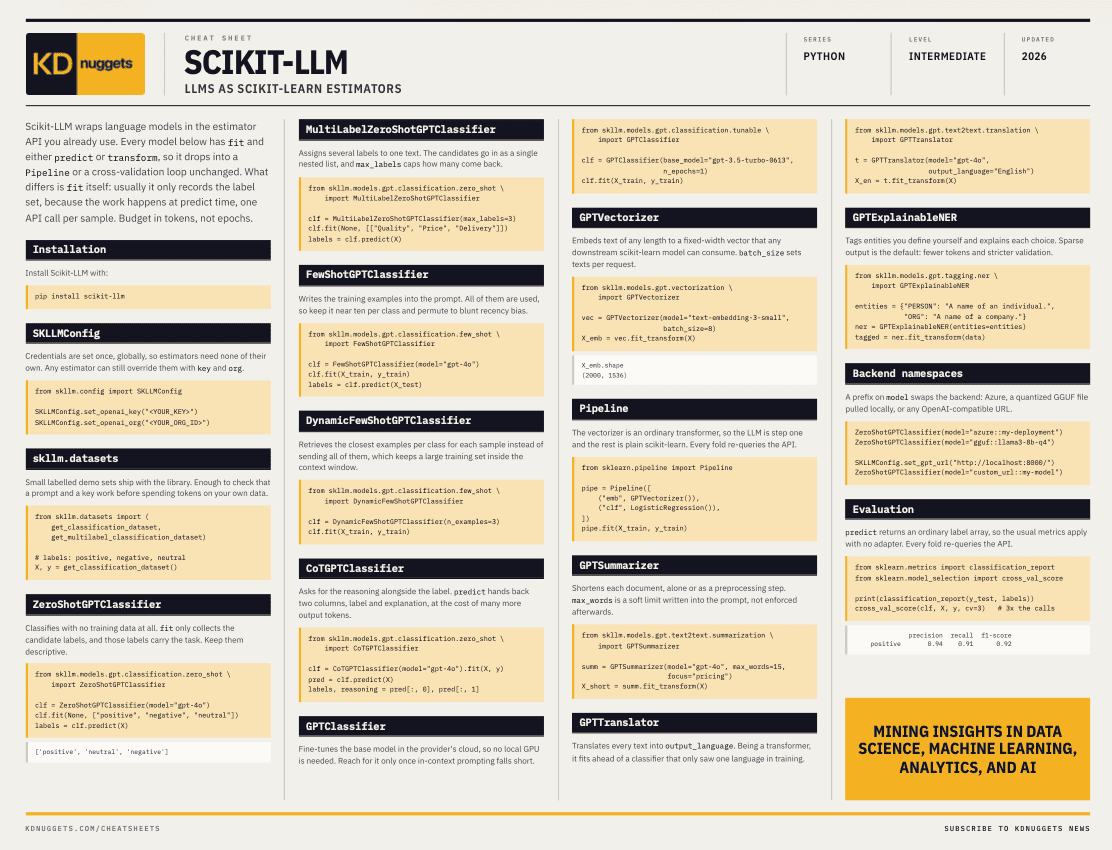
Enter Scikit-LLM, a bridge between these two approaches. This tool aims to bring LLM capabilities under the umbrella of the familiar scikit-learn estimator API. With Scikit-LLM, every model is designed to incorporate a fit method, alongside either predict or transform. This makes it compatible with existing pipelines and better suited for cross-validation processes. While the fit method may focus more on logging labels instead of heavy computation, significant processing takes place during the prediction phase—one API call at a time per sample evaluated. This token-centric method not only streamlines user workflows but also opens up pathways for more advanced usage without requiring a complete overhaul of familiar tools.
Key Classes to Explore
Among the features Scikit-LLM offers, the ZeroShotGPTClassifier is a particularly noteworthy option. It's frequently employed for quick classification tasks, though its initial requirement for fit(None, [...]) might throw users off. This seemingly counterintuitive approach is designed to define the tasks at hand effectively. Clarity in labeling can greatly enhance the precision of outcomes. Yet, when zero-shot classification proves inadequate, users might find better results with the DynamicFewShotGPTClassifier. This class has a clever mechanism for selecting representative examples for each class, refining prompt responses while minimizing strain on the entire training data. It’s an efficient response to the common challenge of prompting and learning from limited data—where every example truly counts.
Additional Tools and Considerations
Adding to its value, Scikit-LLM provides tools like GPTVectorizer, which transforms any input text into a fixed-width vector. This capability ensures that users can apply traditional scikit-learn methods—think logistic regression—directly on the generated embeddings. Also, the GPTTranslator class introduces a whole new dimension by enabling multilingual capabilities. This means you won’t have to retrain existing classifiers that were only trained on English data, enhancing both efficiency and functionality. This is a significant consideration for many teams, especially those operating in diverse linguistic environments.
Considering Costs and Efficiency
One critical aspect to watch out for is the cost implications of token usage. For instance, if you conduct a cross_val_score with a parameter of cv=3, you're looking at three times the API calls. It’s easy to underestimate how quickly these costs can escalate, particularly during extensive operations like grid searches. As machine learning budgets tighten in many organizations, being mindful of your plan’s efficiency becomes essential. You'll want to ensure that high performance doesn’t come at an unsustainable price point. (And this is the part most people overlook.)
Implications and Future Outlook
At first glance, Scikit-LLM appears to be just another toolkit in a crowded field, but it holds the potential for a significant shift in how LLMs are approached in a machine learning context. By enabling users to interact with LLMs through an API they're already familiar with, the barriers to entry for integrating these advanced models significantly lower. This could lead to greater adoption within organizations already rooted in traditional machine learning methodologies. While the technology itself is evolving, the methodologies surrounding it may not need to change as dramatically as one might expect. It opens the door for those who may find themselves hesitant to experiment with LLM integration due to concerns about a steep learning curve. If you’re working in this space, this could change how teams approach machine learning projects—allowing for both rapid deployment and iterative improvements.
Download the cheat sheet for quick reference, whether you're just starting or a seasoned user refining your approach.



Discussion
Sign in to join the discussion.