Malware tactics have shifted, relying more on legitimate tools and workflows, while AI-enabled threats add complexity to the vulnerability landscape.
Emerging Malware Trends in H1 2026
The first half of 2026 has shown a pronounced preference among threat actors for exploiting legitimate tools, known platforms, and standard workflows within both corporate and consumer spaces. Attackers effectively navigate environments by leveraging exposed software, developer tools, and third-party services to infiltrate systems, steal credentials, and monetize breaches while camouflaging their activities. This strategy emphasizes normalcy, making it increasingly challenging for defenders to spot malicious actions before they escalate. As a result, there's a pressing need for enhanced exposure management, improved identity governance, and diligent monitoring of third-party integrations.
AI’s Growing Presence in Cyberattacks
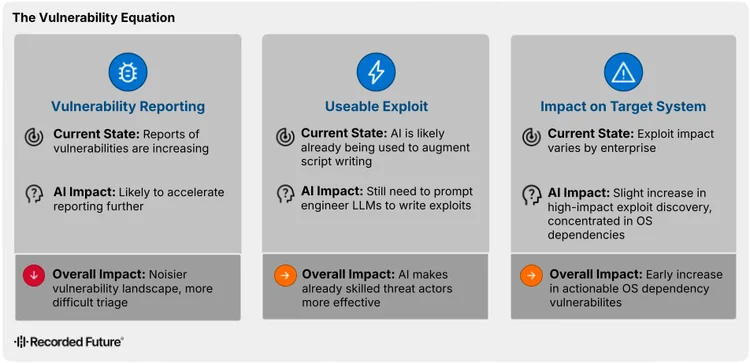
The landscape of cyber threats is shifting as AI-enhanced cyberattacks gain visibility, primarily augmenting existing techniques rather than introducing fully autonomous operations. In the vulnerability space, the rise in AI-assisted research has led to an uptick in vulnerability reports. This could compress remediation timelines significantly by expediting exploit-path analysis and simplifying the process for skilled operators developing their exploits.
However, it's essential to note that while the AI component is becoming more prevalent, most capabilities so far fit within lower stages of Recorded Future’s AI Malware Maturity Model (AIM3). Current uses include assisting in tasks like malware persistence and user interface interactions, rather than fully independent malicious activities.
Broader Exploitation of Vulnerabilities
In terms of vulnerability exploitation, the Insikt Group reported 215 actively exploited common vulnerabilities and exposures (CVEs) in H1 2026, marking a 34% increase over the same period in the previous year. Alarmingly, many of these vulnerabilities were easily accessible—142 could be exploited without prior authentication. This trend underscores a critical shift: attackers are no longer limited to isolated incidents but are increasing the sophistication of their exploitation methods.
Threat actors often adhere to established post-exploitation playbooks, applying familiar techniques across both newly reported and long-standing vulnerabilities. For instance, malware delivery tactics leverage traditional execution and obfuscation strategies, including phishing schemes, while supply-chain attacks increasingly target package managers and developer environments. Such compromises facilitate further intrusion into cloud ecosystems, highlighting a central risk: the ability of malicious actors to operate within trusted services under the radar of conventional detection methods.
Mobile Malware and Payment Fraud
One notable trend in H1 2026 was the rise of mobile malware designed to exploit Near Field Communication (NFC) functionalities. Families like NFCShare and NGate emerged, targeting payment information and enabling unauthorized transactions. This indicates a growing sophistication in targeting mobile platforms, where many users may be less vigilant compared to traditional computing devices.
AI-Driven Vulnerability Insights
The introduction of advanced AI models, such as the Claude Mythos Preview from Anthropic, has strengthened the relevance of AI in vulnerability research and management. Following its release, the National Vulnerability Database reported a notable increase in disclosed vulnerabilities, indicating that these models enhance the speed and breadth of vulnerability reporting. However, the fundamental dynamics of vulnerability exploitation remain unchanged; attackers still rely on the cycle of identifying, validating, and weaponizing vulnerabilities for successful operations.
AI has increased the workload for defenders by generating a higher volume of credible reports that require careful triage and response. Additionally, attackers are using AI to produce more effective exploits and remain adaptive in their strategies. For security teams, this presents a narrowing window to mitigate new threats before they become operationalized by malicious actors.
Continuing Trends in Exploitation
The risk landscape suggests that vulnerabilities with network access and low authentication requirements are particularly appealing to threat actors. For example, a significant portion of the exploited CVEs presented minimal barriers to entry, with many being publicly available exploits. This reality necessitates a proactive and comprehensive risk management strategy that encompasses all software products, particularly those from vendors that may not remain in the security spotlight.
Microsoft Leading Vulnerability Exploitation
Among exploited vulnerabilities, Microsoft continues to dominate with 40 unique CVEs identified in H1 2026, which is an increase from 28 the previous year. This trend indicates that while some vulnerabilities may appear in various vendors' products, a substantial concentration of risk is still associated with a few key players. Consequently, defending these high-exploitation areas should remain a priority.
In sum, H1 2026 has not only showcased a worrying escalation in malware strategies that leverage legitimate infrastructures but also pointed toward an increase in the sophistication of both vulnerabilities and the methodologies employed by attackers. Security professionals must remain vigilant, adapting their approaches to address these evolving threats and managing the new complexities introduced by AI in the cyber threat landscape.



Discussion
Sign in to join the discussion.